

Generative Engine Optimization: How to Win Citations in ChatGPT, Claude, and Perplexity
Generative engine optimization is the practice of making your content the source AI cites. Here is how citations work across ChatGPT, Claude, Perplexity, and Gemini.
Generative engine optimization (GEO) is the next layer on top of answer engine optimization. AEO gets you into the candidate pool that an AI engine considers. GEO gets you cited, specifically, as the source the engine names in its answer.
The distinction matters because the economic value has shifted. Ninety percent of B2B buyers click citations in AI-generated answers, per Search Engine Journal's 2026 reporting. Being in the candidate pool is necessary. Being the cited source is what captures the click.
This guide covers how generative engine optimization works across the four major AI answer engines and what to prioritize for each.
What generative engine optimization changes
Classic SEO ranks entire pages. AEO surfaces pages into AI answer candidate pools. GEO selects which candidate actually gets named in the answer.
The selection criteria differ from page ranking. A model weighing candidate citations considers:
- Fragment extractability (can a short self-contained sentence carry the answer?)
- Entity confidence (does the source resolve to a known entity in the model's graph?)
- Source attribution (does the page cite its own sources, which the model then cascades?)
- Recency (does the datePublished or dateModified signal freshness?)
A page that wins these four tests gets cited more often than a page that only wins on traditional ranking signals.
How each engine differs
The four major AI answer engines use different selection logic. Generative engine optimization means tuning for each one's preferences.
ChatGPT and OpenAI Search
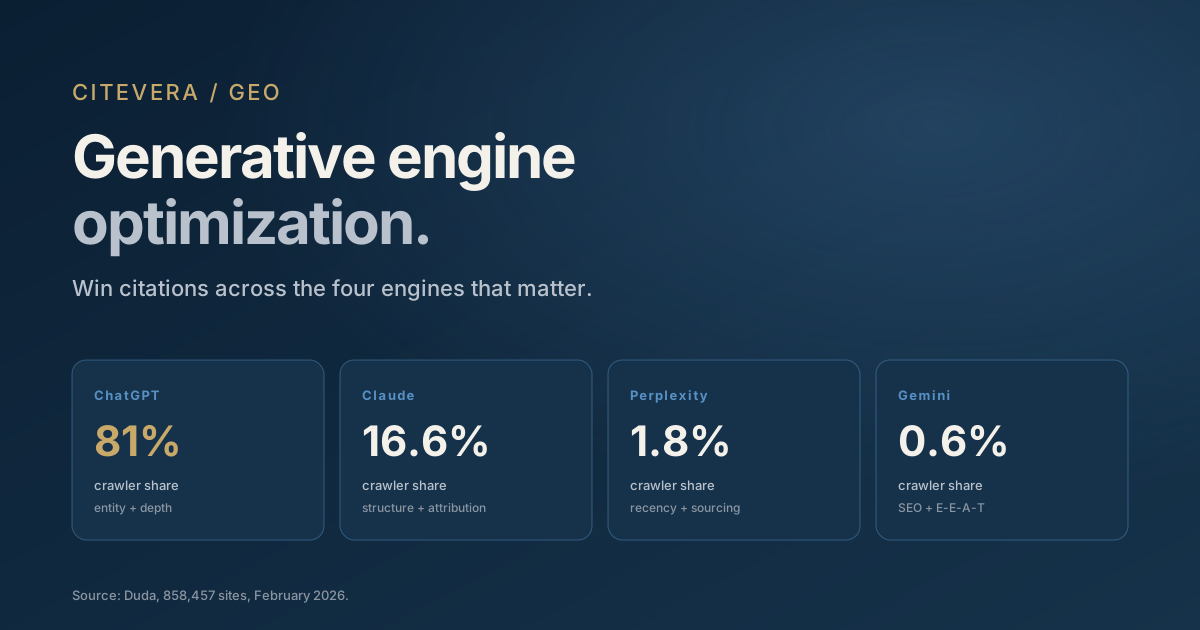
GPTBot accounts for 81% of all AI crawler traffic (Duda, 2026; single-platform, correlational). ChatGPT prefers sources with:
- Strong entity presence (Organization JSON-LD with complete sameAs linking to LinkedIn, Wikidata, Crunchbase)
- Depth of content on the specific topic (topical clusters, not one-off posts)
- Explicit sourcing inside the content itself (when your page cites sources, ChatGPT is more likely to cite you)
Our GPTBot optimization guide covers the access layer and the five technical changes that maximize GPTBot visibility.
Claude and ClaudeBot
ClaudeBot is 16.6% of AI crawler traffic. Claude leans toward:
- Structural clarity (heading hierarchy, short paragraphs, explicit answers near headings)
- Thoughtful source attribution (Claude tends to cite sources that themselves cite well)
- FAQ schema and Q-and-A formatting (extractable question-answer pairs get cited more)
Claude's citation behavior is closer to academic attribution than ChatGPT's, which can skew toward domain authority.
Perplexity
PerplexityBot is 1.8% of crawler traffic but accounts for a disproportionate share of B2B research queries. Perplexity prefers:
- Recent content with clear datePublished and dateModified signals
- Sites with explicit source links inline (Perplexity's citation UI rewards sites that show their work)
- Clean, extractable passages with numeric facts
Perplexity is where the stat citation pattern pays off most visibly.
Gemini and Google AI Overviews
Gemini's direct crawler share is 0.6%, but Google AI Overviews draw from the indexed Google corpus. That means classic SEO signals still matter for Gemini visibility: E-E-A-T, backlinks, Core Web Vitals. The GEO-specific overlay is structured data: Google AI Overviews pull heavily from schema-marked content.
The cross-engine citation stack
Most teams cannot optimize for each engine separately. The good news is that roughly 80% of what works for ChatGPT also works for Claude, Perplexity, and Gemini. The common stack is:
1. Detection: all four crawlers allowed in robots.txt and WAF 2. Entity graph: Organization schema with complete sameAs, Person schema for authors 3. Structural clarity: heading hierarchy, short paragraphs, FAQ blocks on question-shaped pages 4. Recency signals: datePublished, dateModified, and content updated quarterly 5. Attributed statistics: numbers with source links in-line
This stack lifts generative engine optimization across every major engine. Per-engine tuning is the last 20%, and for most marketing teams it is not worth the effort until the base stack is in place.
Where GEO differs from AEO
It is easy to treat generative engine optimization and answer engine optimization as synonyms. They overlap, but the distinction matters for prioritization.
AEO is about making your content parseable and extractable by any AI engine. It is structural and technical.
GEO is about making your content the specific source an engine names. It is about entity strength, source attribution, and competitive positioning within a topic.
A site can score high on AEO (clean schema, good structure, allowed crawlers) and still lose in GEO if its entity presence is weak or its topical coverage is thin. Getting into the candidate pool is stage one. Getting cited is stage two.
How to measure GEO performance
Measuring generative engine optimization is harder than measuring SEO rankings because AI engines do not publish rank tables. Three imperfect but useful proxies:
Citation tracking. Tools like Profound, Otterly, and Peec AI monitor AI engine answers for mentions of your brand. They report how often you appear across queries in your category.
Referral traffic segmented by source. AI engines increasingly pass referer information. Filtering Google Analytics or similar for chat.openai.com, perplexity.ai, gemini.google.com, and claude.ai referrers gives a rough volume signal.
Manual query testing. Pick 20 queries your buyers would ask AI engines about your category. Run them against each engine monthly. Track whether you appear and whether you are cited as a source. Monitor AI brand mentions for free covers the free-tier workflow.
Citevera's audit scores your site against GEO signals specifically. It does not track real-time citations (that is a separate job handled by monitoring tools), but it does tell you whether your site is set up to be cited in the first place.
A practical GEO roadmap
If you are starting from zero, prioritize in this order:
1. Fix detection: allow all major AI crawlers in robots.txt and WAF 2. Deploy Organization schema with complete sameAs linking 3. Audit paragraph structure across your top 20 pages; shorten any paragraph over three sentences 4. Add FAQ schema to pages that answer common buyer questions 5. Build or deepen topical clusters on your two or three highest-intent topics 6. Refresh top-performing content quarterly so dateModified stays current 7. Monitor citations monthly and iterate
This sequence front-loads the technical work and back-loads the editorial investment. Most teams can complete the first three steps in a week. The editorial work takes months.
Key takeaways
- Generative engine optimization is the practice of getting cited, not just being in the candidate pool.
- ChatGPT prefers strong entity presence. Claude prefers structural clarity. Perplexity prefers recency and attribution. Gemini leans on classic SEO signals.
- 80% of what works for one engine works for all four. Per-engine tuning is the last 20%.
- Citation tracking tools measure GEO performance after the fact. Citevera scores whether your site is set up to be cited in the first place.
- The order that matters: detection, entity, structure, FAQ, depth, freshness, measurement.
What to do next
Start with a free audit at scan.citevera.com. The report identifies your detection-layer blockers and your weakest GEO signals, ranked by impact.
If you run a marketing agency and want to offer GEO as a service line, see Citevera for agencies for white-label reports and bulk rescan workflows.