

How ChatGPT Picks Citations: OpenAI's Selection Patterns and What They Mean for AEO
ChatGPT's citation behavior shifted significantly with web search and SearchGPT. Here are the patterns OpenAI's models reward and how to optimize specifically.
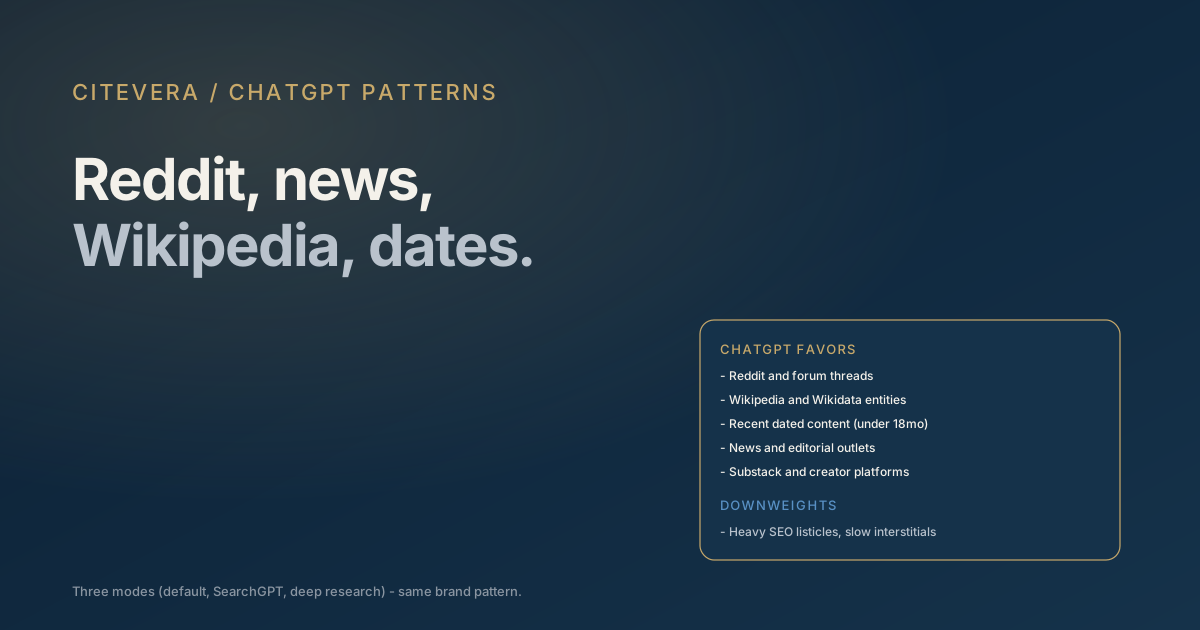
ChatGPT's citation behavior is the most variable of the four major AI engines. OpenAI ships several modes (default chat with web search, SearchGPT, deep research) each with distinct citation patterns. The patterns also evolve quarterly as OpenAI iterates. Optimizing for ChatGPT requires understanding which mode you are optimizing for and how its preferences differ from Claude, Perplexity, and Gemini.
This post covers ChatGPT's citation patterns as of 2026, the source types it favors across modes, and the tactical changes that materially improve ChatGPT citation rates.
ChatGPT's modes and how citation differs across them
Three distinct citation behaviors:
Default chat with web search enabled
The most common mode for typical user queries. ChatGPT chooses whether to invoke web search based on query characteristics. When it searches, it typically retrieves 3 to 8 sources and cites 2 to 5 in the response.
Citation pattern: numbered footnote-style references in the response body, with a "sources" list at the bottom.
SearchGPT (search-mode)
A search-first interface that always invokes web retrieval. Citation density is higher (often 5 to 12 sources) and the answer is more search-result-like with more direct attribution.
Citation pattern: more aggressive inline citation with shorter synthesized text and longer source list.
Deep research mode
For long-form research queries. ChatGPT browses extensively (15 to 50 sources) and produces a multi-section report. Citations are extensive and often include source quality assessment notes.
Citation pattern: comprehensive bibliography-style attribution, with some sources flagged as "primary" vs "secondary".
Each mode has somewhat different citation thresholds. Optimizing for the default chat mode is the highest-leverage choice because it represents the largest user volume.
Source types ChatGPT favors
Patterns observed across thousands of ChatGPT citations in default-chat mode:
Reddit, Quora, and forum content
ChatGPT cites Reddit threads more aggressively than other AI engines. For practitioner-experience queries ("does X really work for Y"), ChatGPT often surfaces Reddit alongside or above conventional content sources. The Reddit and Quora citations post covers the strategic implication: forum activity matters for ChatGPT visibility.
Recent content with publish dates
Like Claude, ChatGPT factors recency. Content from the last 6 to 18 months gets preferred for non-evergreen queries. Older content still gets cited for evergreen topics but loses to fresher alternatives when both exist.
News and editorial content
ChatGPT cites mainstream news outlets (NYT, WSJ, Reuters, BBC, AP, Bloomberg) often. Content adjacent to news cycles or that gets news coverage benefits from this preference. A blog post about an industry topic that the WSJ has also covered gets cited more than the same post on a topic with no news adjacency.
Substack and creator-platform content
ChatGPT cites Substack, Medium, and creator platforms more than Claude does. Individual creators with strong topical authority can earn ChatGPT citations even from smaller readership bases.
Wikipedia
ChatGPT cites Wikipedia heavily. This affects entity disambiguation: companies and concepts with Wikipedia presence have a meaningful ChatGPT advantage. The organization schema deep-dive covers the Wikidata bridge as a workaround for entities without full Wikipedia pages.
Source types ChatGPT tends to downweight
Three patterns:
Heavily SEO-optimized listicles
Pages with the structural fingerprint of pure SEO content (8 H2s named like "1. The first thing you need to know", thin paragraphs, keyword-stuffed titles) get less citation in ChatGPT's web search than they earn in traditional Google rankings. ChatGPT appears to prefer content that reads as substantive rather than optimized.
Content behind heavy interstitials or ad walls
Pages that load slowly or hide content behind dismissable popups get lower citation. Crawler experience matters; if ChatGPT's retrieval cannot extract clean text, the page loses.
Auto-translated or thin-language content
Sites with low-quality translation get downweighted. ChatGPT favors content originally written in the language of the query.
ChatGPT-specific tactical patterns that lift citation
Six patterns I have seen lift ChatGPT citation rates materially:
Prominent dates on every page
Display the publish date and modified date visibly in the page header or above the title. Article schema with datePublished and dateModified reinforces. ChatGPT factors visible recency more strongly than other engines.
Reddit and Quora presence on your topic
Active participation in relevant subreddits and Quora topics with high-quality answers creates surface area for ChatGPT to cite. This is content marketing in distributed channels rather than your domain.
Direct Q&A formatting
ChatGPT often pulls Q&A pairs verbatim. A page formatted as "Question: X. Answer: Y." or with FAQ schema sees high citation rates on the exact questions covered.
Linking to your sources
Outbound links to authoritative sources in your content correlate with higher ChatGPT citation. ChatGPT's selection appears to weight pages that participate in the citation graph rather than dead-end sources.
Strong title tags that match query phrasing
ChatGPT's web search retrieves partly on title-query similarity. Title tags that closely match how users naturally ask the question outperform titles optimized for SEO keyword density. "How does X work in 2026?" beats "X solution: comprehensive guide and best practices" for ChatGPT.
Updates flagged in the content
Content with explicit update notices ("Updated May 2026 with the latest engine behavior") signals freshness in a way ChatGPT extracts. The update note reads as a freshness anchor.
How ChatGPT handles your brand entity
Two patterns:
Brand recognition is uneven
For well-known brands, ChatGPT confidently surfaces brand information. For lesser-known brands, ChatGPT often hedges or asks for clarification. Strong Organization schema, complete sameAs array, and Wikipedia/Wikidata presence all materially shift this.
Brand mentions in third-party content matter
ChatGPT often cites third-party content that mentions your brand alongside your own pages. This means earning brand mentions in well-cited sources (Reddit threads, news coverage, creator content) compounds your ChatGPT presence in ways that ranking your own pages does not.
The brand mention tracking post covers measurement of this surface across engines.
How to test what ChatGPT cites for your topics
Three approaches:
ChatGPT manual queries
Use ChatGPT (Free, Plus, or Pro) with web search enabled. Run 15 to 25 queries on your topics monthly. Note which sources appear and where you appear (or do not).
SearchGPT side-by-side
If you have access to SearchGPT, run the same queries there. Note differences in citation density and selection. SearchGPT often cites more sources, which can reveal where your content ranks just outside the default-chat citation set.
Track third-party mentions
Set Google alerts for your brand name and key product terms. Many of the third-party mentions you find this way are exactly the pages ChatGPT cites when discussing your brand or category.
Where ChatGPT diverges from other engines
Three notable divergences:
- vs Claude: ChatGPT cites Reddit/forum content more; Claude cites primary documentation more.
- vs Perplexity: Both cite extensively, but Perplexity is more search-result-like; ChatGPT is more synthesis-oriented with fewer but more central citations.
- vs Gemini: ChatGPT and Gemini both lean on news content; Gemini has tighter Google integration so it sometimes cites differently for breaking-news topics.
Practical optimization checklist for ChatGPT
If you have an existing AEO program and want to lift ChatGPT citations specifically:
- Display visible publish and modified dates on every page.
- Include Q&A formatting or FAQ schema for buyer questions.
- Earn Reddit/Quora presence on your top 5 topics.
- Build Wikipedia/Wikidata entries for your company entity.
- Write title tags that match natural query phrasing.
- Cite outbound sources liberally to participate in the citation graph.
These six tactics produce noticeable ChatGPT citation lift within 60 to 90 days for sites that already rank reasonably in traditional search.
Key takeaways
- ChatGPT runs three modes (default, SearchGPT, deep research) with somewhat different citation patterns.
- ChatGPT cites Reddit, news, Substack, and Wikipedia more than other major engines.
- Visible publish dates, Q&A formatting, and natural-language title tags lift ChatGPT citations specifically.
- Brand mentions in third-party content matter as much as ranking your own pages.
- ChatGPT downweights heavily SEO-optimized listicles and slow/interstitial-heavy pages.
What to do next
Run a free audit at scan.citevera.com to see whether your top pages have the elements ChatGPT favors: visible dates, Q&A formatting, FAQ schema, natural-language titles.
For the comparable engine, Claude citation patterns covers Anthropic's distinct selection logic.