

Schema.org for AI Search: The Entity Graph Blueprint
Schema.org for AI search is about entity graph construction. Here is the complete blueprint: Organization, Person, Product, with sameAs as the load-bearing field.
Most schema.org for AI search content treats the standard as a checklist: deploy these five types, validate, move on. That misses the point. The real job of schema.org in AI search is entity graph construction: making your brand, your products, and your people first-class entities in the graph the AI engine builds about the world.
This post is the blueprint for schema.org for AI search through the entity-graph lens. Which types anchor entities, which fields link them, and which omissions break the graph even when the types look correct.
Why the entity graph matters
AI engines do not cite URLs. They cite entities. When ChatGPT answers "what are the best tools for X?" it is not selecting from a URL list; it is selecting from an entity list. URLs get attached to entities as evidence.
A site that resolves cleanly to a named entity in the engine's graph gets cited. A site that is invisible to the entity graph gets skipped, even if its content is excellent. The gap between the two is what schema.org for AI search is really trying to close.
Per Duda's February 2026 analysis (a single-platform, correlational dataset), sites with Google Business Profile sync (one entity-graph linkage among many) had a 92.8% AI crawler rate versus 58.9% without. That gap is the entity-graph effect showing up in crawler attention.
The three entity types that matter
Schema.org has hundreds of types. For AI search entity graph construction, three carry most of the weight.
Organization
Your company as an entity. Deployed on your homepage. This is the anchor for everything else.
The minimum field set is unambiguous:
{
  "@context": "https://schema.org",
  "@type": "Organization",
  "name": "Citevera",
  "url": "https://citevera.com",
  "logo": "https://citevera.com/logo.png",
  "description": "AI search readiness audits and fixes.",
  "sameAs": [
    "https://www.linkedin.com/company/citevera",
    "https://www.crunchbase.com/organization/citevera",
    "https://www.wikidata.org/wiki/Q123456",
    "https://github.com/citevera"
  ]
}
The name, URL, and logo fields are structurally required. The sameAs array is the load-bearing field. It tells the engine: "this site is the same entity as these external profiles." Without sameAs, the engine sees a site with a name and has to guess whether it matches any known entity.
Person
Your employees, specifically authors and spokespeople. Person schema on author pages gives individual people entity status, which raises the authority of content they write.
{
  "@context": "https://schema.org",
  "@type": "Person",
  "name": "Author Name",
  "jobTitle": "Head of Content",
  "worksFor": {
    "@type": "Organization",
    "name": "Citevera",
    "url": "https://citevera.com"
  },
  "sameAs": [
    "https://www.linkedin.com/in/authorname",
    "https://twitter.com/authorname"
  ]
}
Person schema with worksFor linking back to your Organization builds a bidirectional graph. The engine resolves the author as a real person with external profiles, then resolves them as an employee of your entity, then transitively strengthens the article's authority.
Product or Service
What you sell, as an entity. Deployed on product pages, pricing pages, and category landing pages.
{
  "@context": "https://schema.org",
  "@type": "Product",
  "name": "Citevera",
  "description": "AI search readiness audits",
  "brand": { "@type": "Organization", "name": "Citevera" },
  "offers": {
    "@type": "Offer",
    "price": "29.00",
    "priceCurrency": "USD",
    "url": "https://citevera.com/pricing"
  },
  "aggregateRating": {
    "@type": "AggregateRating",
    "ratingValue": "4.7",
    "reviewCount": "127",
    "url": "https://www.g2.com/products/citevera/reviews"
  }
}
Product + Offer + AggregateRating create a product entity linked to your Organization and backed by third-party review platform data. The aggregateRating.url pointing at G2 is another entity-graph linkage.
The sameAs field in depth
sameAs is the most important single field in schema.org for AI search. It deserves its own treatment.
What sameAs does: it asserts "this entity on your site is the same entity as these external URLs." The engine uses it to merge entity knowledge across sources. Your site says you are Citevera. LinkedIn says Citevera exists with these employees. Crunchbase says Citevera was founded in a specific year with specific funding. The engine merges all of this under one entity ID.
Where to get sameAs URLs:
- LinkedIn company page
- Crunchbase profile
- Wikidata entry (if your company has one; if not, consider creating one)
- GitHub organization (if relevant)
- G2, Capterra, TrustRadius product pages
- Industry-specific platforms (Yelp for local, Zillow for real estate, etc.)
- Google Business Profile (via its published URL)
Aim for 4 to 8 external profiles in your sameAs array. Quality matters more than quantity; a sameAs array with five real high-authority profiles beats one with fifteen low-authority directory listings.
The entity graph blueprint
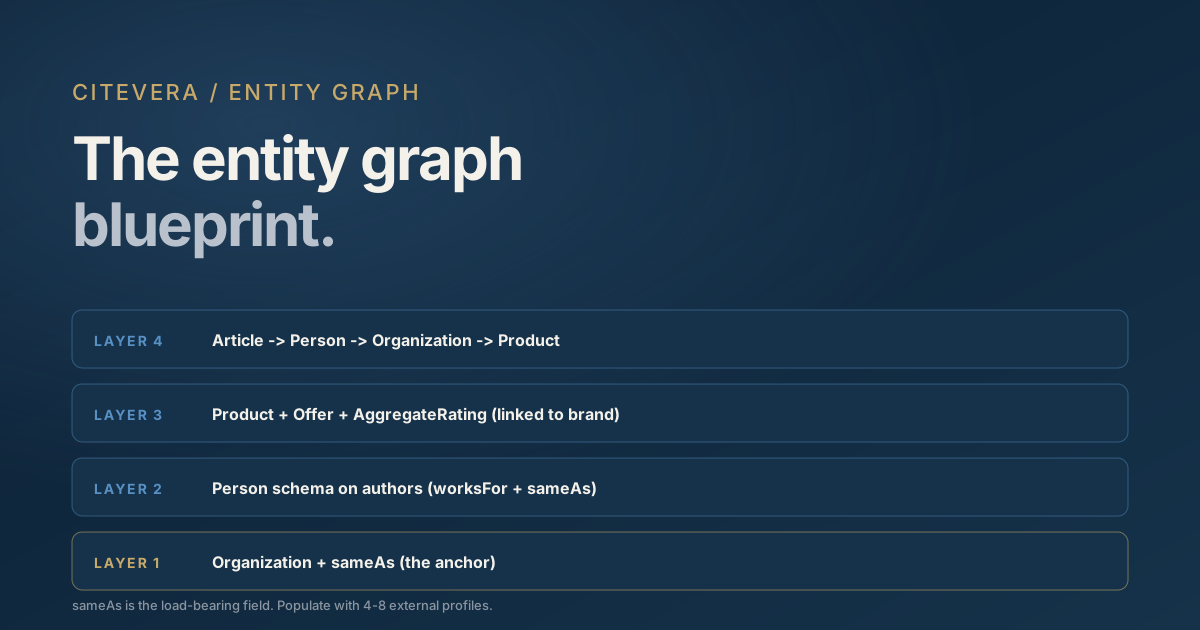
A four-layer blueprint for schema.org for AI search entity construction:
Layer 1: Organization on the homepage. Complete sameAs. This is non-negotiable.
Layer 2: Person on author pages. Each content contributor gets a Person block with worksFor linking to your Organization and sameAs pointing to their external profiles.
Layer 3: Product and Service on product pages. Brand field linking back to Organization. Offer with structured pricing. AggregateRating linked to external review platforms.
Layer 4: Article on content pages. Author field linking to the Person (by URL, via @id reference). Publisher field linking to the Organization. This ties every piece of content back to the entity graph.
When all four layers are present and cross-linked, the engine sees a connected graph: Articles -> Person -> Organization -> Products, with sameAs links fanning out to external entities at each node. Missing any layer weakens the graph but does not break it; missing Organization breaks everything downstream.
Common entity graph failures
Three patterns show up repeatedly in audits.
Organization deployed without sameAs. Common in new sites. The entity exists but has no external linkage. Fix by adding the sameAs array with 4 to 8 external profiles.
Article schema without author or publisher. Common when CMS-generated schema is incomplete. The article exists as content but is not attributed to an entity. Fix by populating author.url and publisher fields.
Product without aggregateRating. The product exists but has no review signal. Fix by linking to third-party review platforms via aggregateRating.url.
Each of these can be caught by a Rich Results Test validation plus a human review pass. Validation alone does not catch missing entity linkages.
Schema.org for AI search validation
Three validation steps:
1. Run the JSON-LD through Google's Rich Results Test for each page template. 2. Parse sameAs URLs and verify each resolves to a real external profile that matches the entity. 3. Check Article pages for author.url pointing at a Person schema block. If author is only a text name, the entity graph is broken at the author level.
Tools like Citevera's audit run all three checks automatically and flag gaps. Our schema.org for AI engines guide covers the field-level details for each type.
Key takeaways
- Schema.org for AI search is about entity graph construction, not just type deployment.
- Three types carry the load: Organization, Person, Product.
- sameAs is the load-bearing field. A schema deployment without sameAs has most of the infrastructure and none of the payoff.
- A complete entity graph links Articles -> Person -> Organization -> Products, with sameAs fanning to external profiles.
- Validation alone does not catch missing entity linkages; human review is required.
What to do next
Run a free audit at scan.citevera.com to see whether your site has complete Organization, Person, and Product schema with valid sameAs linking. The report flags specific missing linkages per type.
For the deployment order, see schema markup for AI search: what to deploy first. For the detailed field structure per type, schema.org for AI engines.