

The Compounding Effect of AEO: Why Year Two Outperforms Year One
AEO programs underperform expectations in year one and overperform in year two. The reason is structural compounding. Here is what compounds, what does not, and how to plan for it.
The disappointing first year
Most teams launching an AEO program expect linear progress. Ship structural fixes in month one, see citation lift in month three, see steady gains through month twelve. The reality is different.
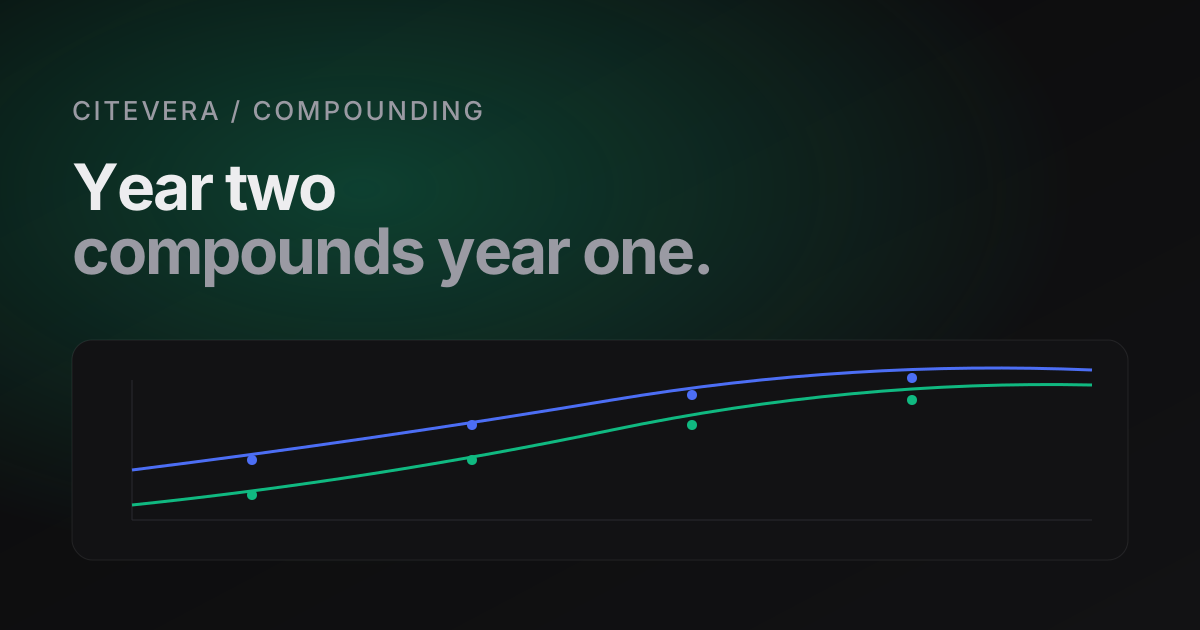
Year one is mostly flat. Citation rates barely move for the first four to six months even when structural improvements are real. Months six to twelve show modest gains, often 10-20% citation rate improvement. By month twelve, the team is either patient or has given up.
Year two looks completely different. The same structural foundation produces 50-100% citation rate gains in months 13-18, with continued strong growth through month 24. The compounding effect kicks in.
Teams that abandoned the program in month nine miss the year-two payoff. Teams that hold the line through year one capture it.
What actually compounds
Three mechanisms drive the year-two acceleration.
Engine representational presence. AI engines build internal representations of brands and topics. The representation strengthens with sustained signal exposure. Six months of structural readiness barely registers in the engine's representation. Eighteen months of sustained signal does. The engine starts treating you as authoritative and citing accordingly.
Cumulative content depth. A topic cluster started in month one has 8 spoke pages by month six and 24 spoke pages by month eighteen. Each spoke reinforces the cluster's topical-authority signal. Year two benefits from a content base that did not exist in year one.
Backlink and PR accumulation. Original research published in month three may earn its largest citation wave in month fifteen as other sites pick it up, link to it, and AI engines reweight in response. Backlinks compound; PR placements compound; citations compound off both.
These mechanisms are real but slow. They cannot be accelerated by spending more in year one - the time component is structural.
What does not compound
Three things teams sometimes hope will compound, but do not.
Content volume without quality. Publishing 50 mediocre articles in year one does not set up year-two compounding. Engines weight quality, not volume. Mediocre content stays mediocre regardless of how long it sits there.
Schema and structural fixes alone. Schema is necessary but does not by itself compound. The structural fixes earn whatever citation rate they earn within a few months; further gains require content depth and authority signals on top.
Brand activity that does not produce content. Social media posting, paid ads, internal events. These can have value but do not contribute to AI citation compounding. The engines do not reweight based on social posts; they reweight based on indexed content.
The honest read: only structurally-sound, sustainably-published content compounds for AEO. Other activities have other purposes; they do not contribute here.
Why this matters for planning
The year-one-flat / year-two-acceleration pattern has direct implications.
Budget and team commitment must extend through 18 months. Programs that lock in only 6-12 months will exit before the compounding kicks in. The case for continued investment in months 13-18 looks weak from a year-one results perspective and strong from a "we are about to capture the payoff" perspective. Boards and exec teams need to understand the curve up front.
Year-one metrics should not include "did we hit citation rate target." Year-one metrics should focus on leading indicators: structural fixes shipped, content cluster completion, original research published, schema coverage. Citation lift is a year-two metric primarily.
Testing windows must be long. A six-week experiment is too short to detect AEO impact. Plan for 90-day windows minimum, 180 days for major changes.
Quitting in year one is the most common mistake. We see this regularly: a team commits to AEO, ships structural fixes, sees flat citations through month nine, concludes "this does not work," reallocates resources elsewhere. Six months later their competitors who held the line are pulling away in citation rate.
What you should track in year one
Since citation rate is mostly flat, year-one tracking focuses on leading indicators.
Audit score. The Citevera AEO score should improve quarter-over-quarter. Year-one targets: +20-40 points off baseline by quarter four.
Schema coverage. Percentage of citable pages with complete schema. Year-one target: 90%+ by quarter three.
Cluster completion. Number of completed topic clusters. Year-one target: 2-3 fully built clusters by year-end.
Content production cadence. Articles per month. Year-one target: hit your committed cadence consistently for 12 months.
Original research published. At least one substantial piece in year one.
These all predict year-two citation outcomes. Track them religiously; trust the curve.
What changes in year two
Year-two metrics shift from leading indicators to outcomes.
Citation rate per engine. Year-two target: 30-100% improvement off year-end-one baseline.
SOV against competitor set. Year-two target: 3-7 percentage point gain.
Cited URLs per month. Year-two target: 2-3x year-end-one volume.
Brand mentions in answers without explicit query. A subtle but powerful indicator: when AI answers mention your brand on questions where you were not specifically asked about, your representational presence has reached a new tier.
The shift is significant. A team that was asking "are we doing this right" in year one is asking "where do we expand next" in year two. The work is the same; the visible payoff is dramatically different.
How Citevera scores this
The Citevera audit + monitoring combination is built around the year-one / year-two dynamic. Audit scoring focuses on leading indicators (structural readiness) which are what year one moves. Monitoring tracks lagging indicators (citation rate, SOV) which are what year two moves.
Customers who run both consistently see the curve clearly: audit scores climbing in year one while citation rates lag, then citation rates accelerating in year two as the structural foundation pays off. The dual view keeps teams from quitting prematurely.
Run a free Citevera audit to establish your year-one baseline
Frequently asked questions
What if I see no progress at all in year one?
If audit score is flat (not just citation rate), something is wrong. Re-check whether the structural fixes are actually shipping or just planned. Audit score should move quarter-over-quarter even when citation rate is flat.
Can I shorten the year-one phase?
A little, with original research as the wedge. A high-quality survey published in month two can produce citation lift in month six rather than month twelve. Otherwise, the time component is structural and cannot be bought.
Does the year-two acceleration sustain into year three?
Yes, with the same caveats. Year three sees continued growth but at a slower rate of acceleration. Most of the compounding payoff is captured in months 13-30. Beyond that, growth is more linear.
What if my competitors are also doing AEO?
The compounding still works but the absolute SOV gain is smaller because competitors are also gaining. The brands that started AEO earliest in the category capture the most. Late entrants face stiffer year-two competition.
How do I keep stakeholders bought in through the flat year-one?
Communicate the curve up front. Set year-one expectations on leading indicators (audit score, content production, schema coverage), not on citation rate or pipeline. Show progress on what you committed to. The year-two payoff will arrive on schedule if you held the line.