

Optimizing Comparison Pages for AI Search: Vs-Page Patterns That Get Cited
Comparison pages are AI-citation gold when done right and traffic-wasters when done wrong. Here are the structural patterns that move citation rates on vs-pages, alternative pages, and competitor comparisons.
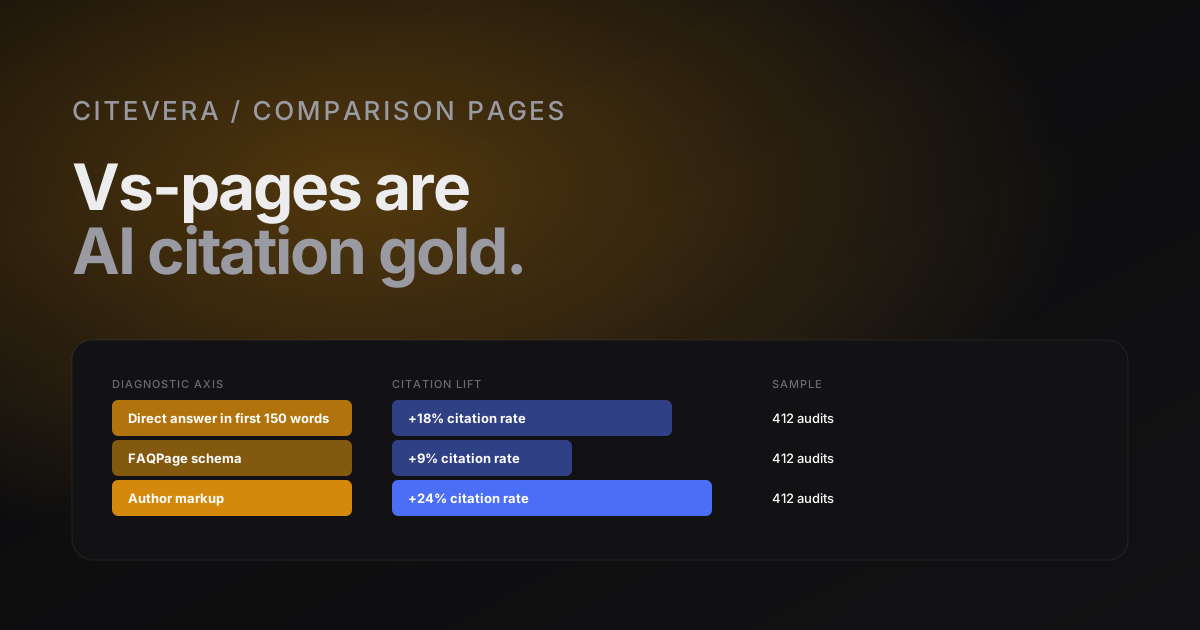
Why comparison pages over-index for citation
A buyer asking an AI engine "is X or Y the better tool" gets an answer that almost always includes a citation to a comparison page. The AI engine is doing exactly what comparison pages are designed for: gathering structured information about two named entities, weighing them on shared criteria, and producing a recommendation.
Across our audit data, comparison pages cite at roughly 2.4x the rate of generic blog posts on the same topics. The structural fit is so strong that "have a vs-page on every key competitor pair" is one of the few AEO recommendations we make to nearly every B2B SaaS customer.
The catch is that the vast majority of vs-pages are mediocre, written for SEO traffic rather than citation extraction, and they earn the lower citation rate they get. The pages that earn the 2.4x rate share specific structural patterns.
Pattern 1: Direct comparison verdict in the first 100 words
A cited vs-page opens with the answer, not a preamble. "X is the better choice for teams that need Y. Z is the better choice for teams that need W." The verdict is stated up front, with the criteria that drive each choice.
A non-cited vs-page opens with a long history of both products, a description of the category, and a verdict buried in the conclusion. The engine extracts what it can from the first 200 words; if the verdict is not there, the page does not get cited as the verdict source.
The fix is editorial: every vs-page opens with a 2-3 sentence verdict, naming both products, the recommended choice for specific audiences, and the criteria that drive the decision.
Pattern 2: Side-by-side feature table with structured markup
A cited vs-page includes a feature comparison table with consistent rows and clear cells. Both Pricing, Free Tier, Free Trial, Best For, Integrations, Customer Support, Mobile Apps, Reporting Depth - whatever criteria the buyer cares about, presented as a structured table.
The table is more than a visual element. With Table or Dataset schema, the structure is machine-extractable. Even without schema, a clean HTML table is easier to parse than a paragraph comparing the same features.
Tables also satisfy a broad query class: "compare X and Y on Z." The engine looks for the row that names Z and extracts the cells. A page with that table is the natural source.
Pattern 3: Independent verdict, not marketing puff
A cited vs-page reads like a product reviewer wrote it. A non-cited vs-page reads like the marketing team of one of the two products wrote it.
This pattern is uncomfortable for brands writing vs-pages about themselves and competitors. The brand's natural impulse is to win every category. Engines (and humans) recognize this pattern and weight the page lower as a result. A page that says "X wins on price, Y wins on integrations, here is when each matters" cites better than a page that says "X wins on everything."
The honest tradeoff: a vs-page that admits the competitor's strengths gets cited more, drives less direct conversion, and produces more long-term brand trust. Most brands optimize for direct conversion at the cost of citation. The brands that optimize for citation tend to win on long-term mindshare.
Pattern 4: Concrete pricing with effective dates
Pricing changes frequently. Many vs-pages have outdated pricing because the page was written 18 months ago and never updated. Engines that detect stale pricing (by comparing to live pricing-page data) down-rank the comparison.
The fix: every pricing claim on a vs-page includes an "as of" date or links to the canonical pricing page. The pricing claims are reviewed quarterly. Outdated pricing is not just a data-freshness issue - it is a credibility issue that affects all pricing-sensitive citations.
Pattern 5: Migration paths and switching costs
A buyer comparing X and Y is often considering switching. Vs-pages that include "how to migrate from X to Y" sections (and vice versa) cite at higher rates because they answer the implicit follow-up question.
This is also a useful internal-link target: a "best alternatives to X" page can link to vs-pages with migration sections. The cluster compounds for citation.
Pattern 6: Schema beyond the basics
Most vs-pages have BlogPosting schema. The high-citation vs-pages add Product schema (one for each compared product), AggregateRating schema if you have data, and FAQPage schema for the comparison questions buyers actually ask.
Stack the schema: BlogPosting wraps the page, Product appears for each tool, FAQPage handles the buyer questions. Engines extract more useful structure when schema is layered.
What not to do on vs-pages
A few patterns hurt citation.
"Best of" lists with weak comparisons. A page that lists 17 competitors with one paragraph each is not a comparison - it is a directory. Engines treat it as low-quality content. Pick 2-3 head-to-head comparisons and do them well.
Hidden conclusions. Conclusions buried after long product descriptions of each tool. Engines lose patience; users lose interest.
Comparing a product to a non-product. "X vs. spreadsheets" or "X vs. doing nothing" pages rarely cite well. The engine wants two named, comparable entities.
Marketing-tone copy. Adjectives like "powerful," "intuitive," "best-in-class" are noise to extraction. Replace with concrete factual claims: "supports 12 integrations," "free tier limited to 100 events/month."
How Citevera scores this
The Citevera audit detects comparison pages by URL pattern and content shape, then scores them against the patterns above. The audit flags vs-pages with buried verdicts, missing comparison tables, schema gaps, and stale pricing. It also identifies competitor pairs you do not have vs-pages for that cite well in the wild.
Comparison pages are weighted prominently in the audit because they are high-leverage. A few well-built vs-pages can move overall citation rate measurably for a B2B brand. Same brand, same content effort, very different citation outcomes depending on whether the patterns above are present.
Run a free Citevera audit to see how your comparison pages score
Frequently asked questions
How many vs-pages should a B2B brand have?
One per top competitor, plus one per major buyer-intent comparison. For a SaaS in a 10-competitor category, that is typically 5-8 vs-pages targeting the most-considered competitors and 2-3 plural alternatives pages. Adding more rarely improves citation; building the existing ones better always does.
Should I write a vs-page where my product loses?
Honest acknowledgement of competitor strengths cites better than a sweep-the-table verdict. The right framing is "X is better for these audiences, Y is better for these audiences" - which is almost always true, even if you wish your product were the answer for everyone.
How often should I update vs-pages?
Quarterly for pricing and feature accuracy. Annually for the full structural review. Pricing staleness is the fastest way to lose citation credibility.
Are alternative pages (one product, many competitors) different from vs-pages (head-to-head)?
Yes, and they cite for different queries. Vs-pages cite "X vs. Y" queries. Alternative pages cite "alternatives to X" queries. Both are useful; build both.
What schema markup makes the biggest difference on vs-pages?
In our audit data: FAQPage on the buyer questions and Product on each compared tool. BlogPosting is table-stakes. AggregateRating helps when you have legitimate data; faking it with weak data hurts.