

BreadcrumbList schema: the five-minute AEO win most sites skip
BreadcrumbList is the lowest-effort, highest-confidence schema addition for most sites. What it does, where to put it, and why it lifts AEO scores out of proportion to the effort.
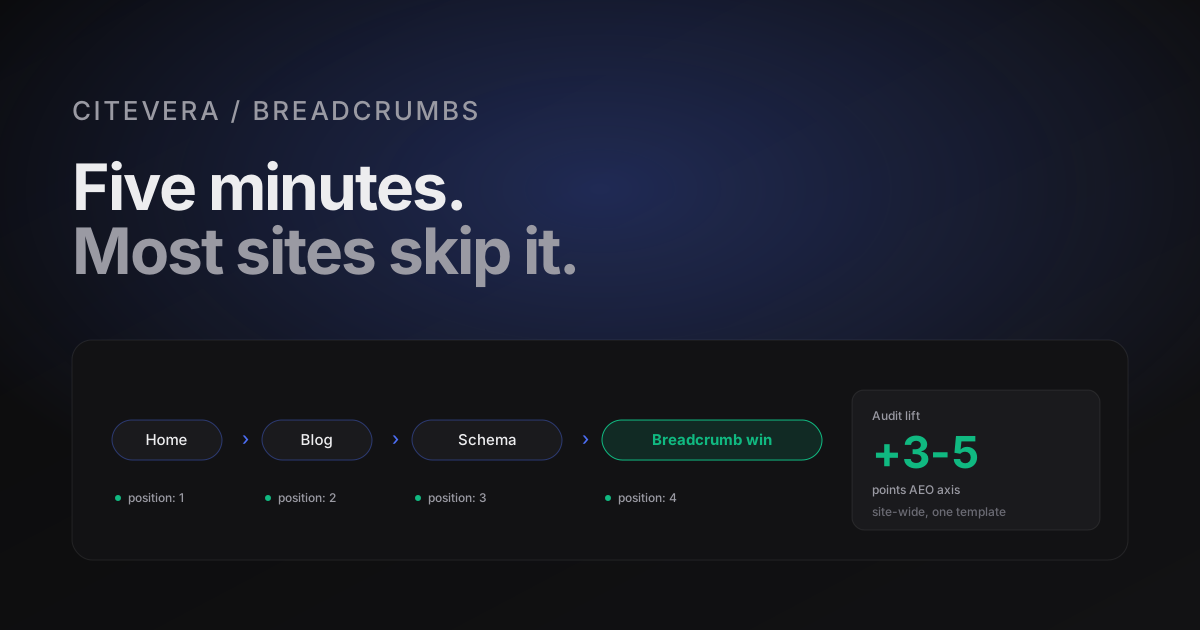
The cheapest schema you can ship
Most schema work involves judgment calls: does this page have a real FAQ, is this tutorial actually procedural, what are the genuine pricing tiers. BreadcrumbList is different. It has no judgment calls. Every template page on your site has a hierarchical position. Expressing that position as schema is a mechanical transform.
And yet BreadcrumbList is one of the most consistently-missing schema types we find in audits. The gap between "every site should have it" and "most sites do not" is wider here than almost anywhere else.
Adding BreadcrumbList across a site template is usually a 30 to 60 minute engineering task. The audit lift averages 3 to 5 points on the AEO axis. That is the best ratio of effort-to-impact in the schema catalog.
What BreadcrumbList does
BreadcrumbList declares the hierarchical path from the site root to the current page. For example, on a blog post:
Home > Blog > Category > This Post
Expressed as schema:
{
  "@context": "https://schema.org",
  "@type": "BreadcrumbList",
  "itemListElement": [
    { "@type": "ListItem", "position": 1, "name": "Home", "item": "https://yoursite.com/" },
    { "@type": "ListItem", "position": 2, "name": "Blog", "item": "https://yoursite.com/blog" },
    { "@type": "ListItem", "position": 3, "name": "This Post", "item": "https://yoursite.com/blog/this-post" }
  ]
}
The schema tells any consumer - search engines, AI crawlers, content aggregators - where this page sits in the site. From the engine's perspective this does three things:
1. Entity context. The engine knows this is a blog post, not a product page, because the trail declares /blog/. It also knows the domain's top-level categories from the breadcrumb trail across many pages. 2. Crawl hints. Links in the BreadcrumbList are strong internal-link signals. They reinforce site structure for the crawler. 3. Citation attribution. When the engine cites a page, some surfaces use the breadcrumb trail to explain where the citation came from (for example, "from Citevera > Blog > AEO"). This is minor but visible.
Where it goes
Every template page. Every time. Homepage, blog index, blog post, product, pricing, category, about, docs, tag archives. The only pages that legitimately skip BreadcrumbList are the homepage itself (it has no ancestor) and error pages.
The standard pattern is to emit it in the page head as JSON-LD. Most modern CMS templates can auto-generate it from the page's URL path, which removes any per-page editorial work.
The minimum template
// Pseudo-code for a Next.js page template
function breadcrumbSchema(path: string, title: string) {
  const segments = path.split('/').filter(Boolean);
  const items = [
    { '@type': 'ListItem', position: 1, name: 'Home', item: 'https://yoursite.com/' }
  ];
  let cumulative = '';
  segments.forEach((seg, i) => {
    cumulative += '/' + seg;
    items.push({
      '@type': 'ListItem',
      position: i + 2,
      name: humanizeSegment(seg), // convert 'how-to-do-x' to 'How to do X'
      item: 'https://yoursite.com' + cumulative,
    });
  });
  // Override the final item name with the page title
  items[items.length - 1].name = title;
  return {
    '@context': 'https://schema.org',
    '@type': 'BreadcrumbList',
    itemListElement: items,
  };
}
Drop this function into your page template, call it once per page with the current URL path and title, emit the resulting JSON in a <script type="application/ld+json"> tag in the head. Done. Every page on the site now has a BreadcrumbList.
The humanization function (humanizeSegment) is where teams sometimes get stuck. "how-to-write-llms-full-txt" should become "How to write llms-full.txt" or just use the post's actual title if you have it available. Either is fine; the engine trusts the title more than the slug, so use the title when you can.
The mistakes that reduce or reverse the lift
BreadcrumbList has fewer failure modes than most schema types, but three patterns still come up.
1. Mismatched position numbers
The position field must be 1-indexed, start at 1 (not 0), and be consecutive. Some generators start at 0, skip numbers, or restart mid-way. Engines treat malformed position sequences as unreliable and discount the entire block.
2. Missing the final item
Some templates emit the breadcrumb without the current page as the last item. The list should include the current page as its own ListItem at the end. Think of it as "here is the full path including where we are". Leaving off the current page breaks the semantics.
3. Breadcrumb items pointing to 404s
If your site has moved URLs, some breadcrumb intermediaries might 404. A BreadcrumbList where the middle link returns an error is worse than no schema, because the engine follows a few of those links as a verification check. Validate that every item URL resolves.
Combining with Organization and Website schema
BreadcrumbList is one of three structural schemas every site should have. The other two:
- Organization on the homepage, declaring the brand entity once.
- WebSite with
potentialAction.SearchActionif your site has internal search.
Together these three form the skeleton that answer engines use to understand your site as a site. Blog pages get BlogPosting on top of BreadcrumbList. Product pages get Product on top of BreadcrumbList. The schema stacks.
A site with only BlogPosting and no BreadcrumbList has described the content but not where it lives. Engines prefer content they can place.
What the lift looks like
On a typical audit, a site with good blog content and no BreadcrumbList scores in the high 60s or low 70s on AEO. Adding BreadcrumbList across the template moves the score into the mid 70s almost immediately because the structural axis jumps. This is not the biggest schema effect - FAQPage and HowTo move specific pages more - but it is the broadest because it applies everywhere at once.
The timing on the measurable citation change is faster than most schema additions. Crawlers pick up the new structure on the next fetch, typically within 7 to 14 days, and the subsequent citation queries see the improved attribution quickly.
Run a free audit to see whether your site has BreadcrumbList schema across its templates
How Citevera scores breadcrumbs
The audit checks for BreadcrumbList on every scanned page and weights missing schema proportionally to how template-heavy the site is. A site with 10 similar pages all missing BreadcrumbList loses more points than a site with one one-off page missing it. The audit also flags malformed breadcrumbs (bad positions, bad URLs, contradictory names).
Fixing it is usually a single template edit. We have seen customer teams ship the fix within a day of the audit arriving and see citation-adjacent improvements in the following re-scan.
Frequently asked questions about BreadcrumbList
Do I need BreadcrumbList if my site has visible breadcrumb navigation?
Yes. The visible nav is for humans; the schema is for machines. They describe the same structure from different angles. Most sites should have both.
What about single-page sites with no hierarchy?
Emit BreadcrumbList with just the homepage if you have nothing else. Alternatively skip it and rely on Organization and WebSite schema. Do not emit a bogus hierarchy to look bigger than you are.
Can I have multiple breadcrumb trails per page?
Yes. Schema.org allows multiple BreadcrumbList blocks on a page (for example, one for category hierarchy and one for tag hierarchy). Be careful - engines may pick one over the other and the prioritization is opaque. Most sites are best served by a single clean trail.
Does BreadcrumbList help with "knowledge panel" style mentions?
Indirectly. Knowledge-panel content is built primarily from Organization and sameAs signals, but BreadcrumbList reinforces the site structure that engines use to decide what to put in a knowledge panel about your brand.